Protecting Lake Naivasha’s Natural Defenses: Why Papyrus Wetlands and Indigenous Riparian Vegetation Matter
Lake Naivasha’s papyrus wetlands and indigenous riparian vegetation are essential natural buffers that help protect water quality, support biodiversity and strengthen the resilience of surrounding communities. Understanding and conserving these ecosystems is vital for safeguarding the lake for future generations.
Protecting Lake Naivasha’s Natural Defenses: Why Papyrus Wetlands and Indigenous Riparian Vegetation Matter
By Team Climate Change Naivasha (TCCN)
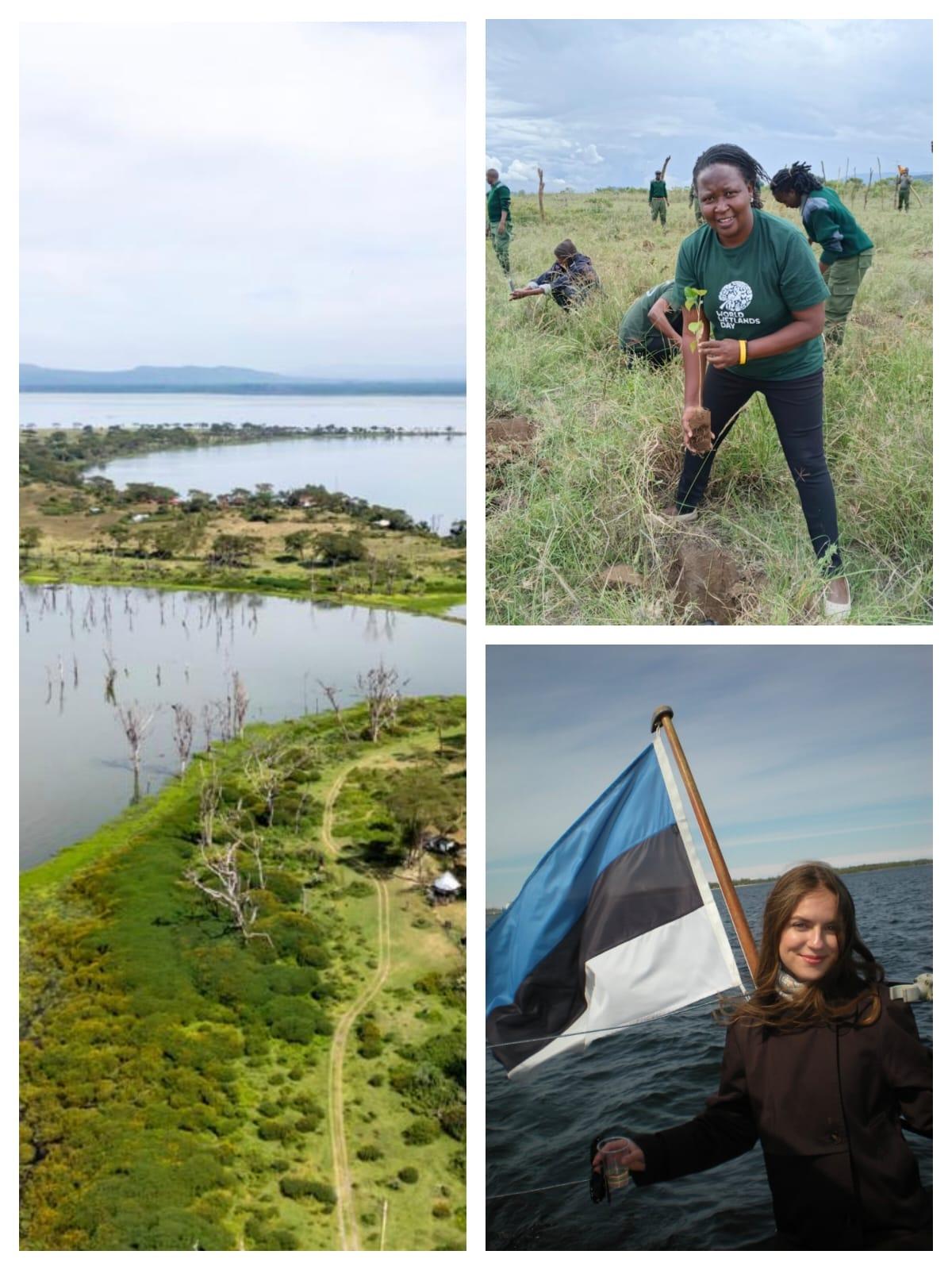
Lake Naivasha is more than a source of freshwater. It is a complex ecosystem that supports biodiversity, livelihoods, agriculture, tourism and communities throughout the surrounding catchment. Its long-term health depends not only on what happens in the open water, but also on the natural vegetation that grows along its shoreline, rivers and wetlands.
Among the most important components of this natural environment are papyrus wetlands and indigenous riparian vegetation. These ecosystems act as natural buffers between the land and the lake, helping to maintain ecological balance.
1. What are papyrus wetlands?
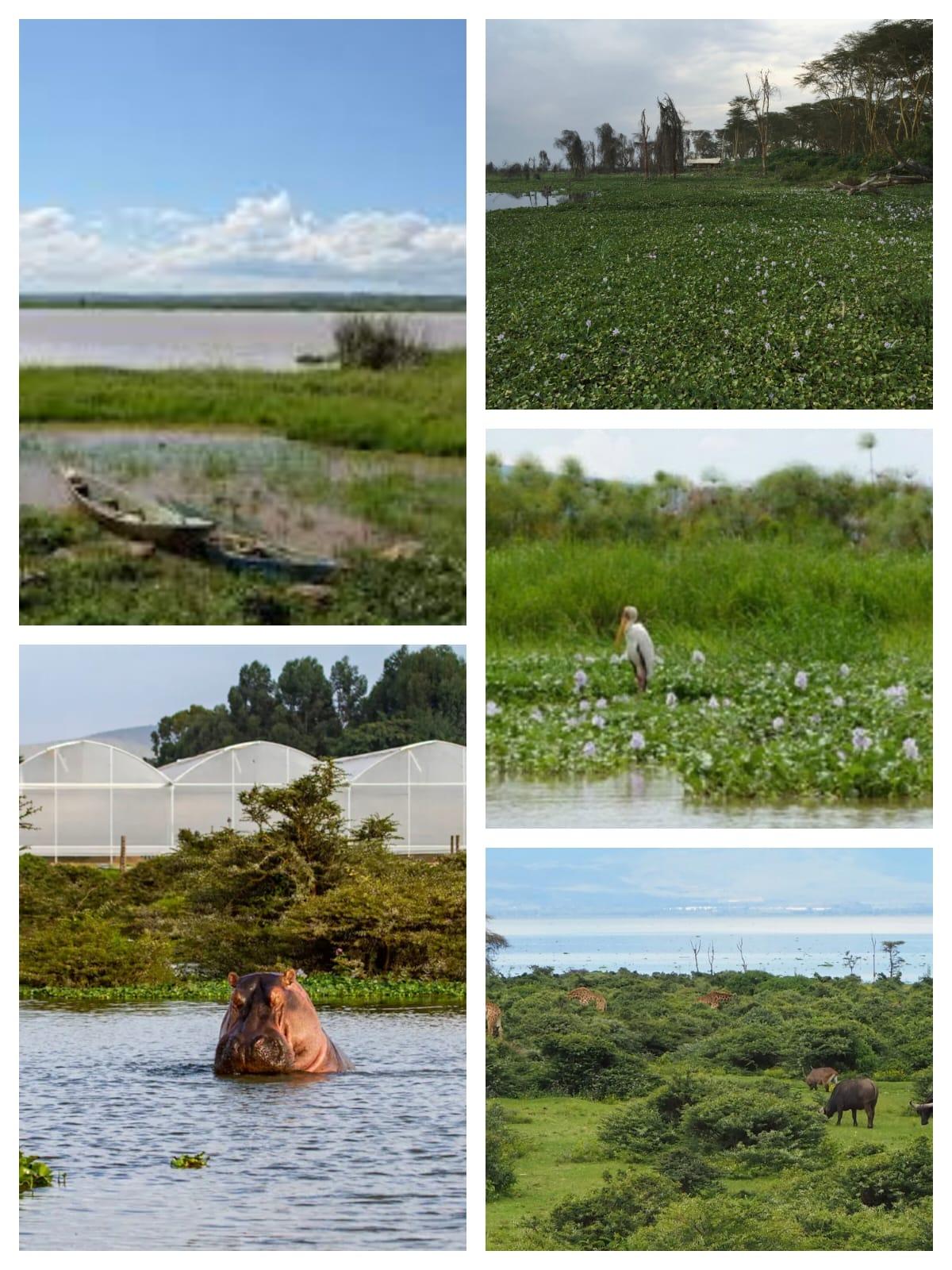
Papyrus (Cyperus papyrus) is a tall, perennial wetland plant commonly found in tropical African freshwater ecosystems. It grows in shallow water and waterlogged areas, where its extensive underground rhizomes and dense stems form important wetland habitats.
Around Lake Naivasha, papyrus historically formed an important fringe along parts of the shoreline. These wetlands are not simply collections of plants. They are functioning ecological systems that provide habitat, regulate the movement of materials and support interactions between land and water.
Research at Lake Naivasha has highlighted the ecological importance of papyrus and the need to restore degraded wetland areas (Morrison & Harper, 2009).
2. How do papyrus wetlands protect Lake Naivasha?
A. They help reduce sediment entering the lake
When rainfall generates surface runoff, soil particles can be transported from farms, roads, settlements and other disturbed areas towards rivers and the lake. Dense wetland vegetation can slow water movement and encourage some suspended particles to settle.
This helps reduce the amount of sediment reaching sensitive shallow-water habitats.
B. They help regulate nutrients
Agricultural runoff and other catchment inputs may carry nutrients such as nitrogen and phosphorus into aquatic ecosystems. In appropriate conditions, papyrus plants and associated microorganisms can take up, transform and retain some of these nutrients.
This is important because excessive nutrient enrichment can contribute to eutrophication, which may encourage excessive algal growth and affect water quality.
However, wetlands do not permanently remove every nutrient that enters them. Their effectiveness depends on hydrology, vegetation condition, season and the way the wetland is managed.
C. They provide important wildlife habitats
Papyrus wetlands provide feeding, breeding, shelter and nesting habitats for different organisms, including birds, invertebrates and other wetland-dependent wildlife.
Protecting these habitats therefore contributes to the conservation of Lake Naivasha's biodiversity.
D. They support local livelihoods
Healthy wetlands can provide resources and ecosystem services that benefit neighboring communities. Papyrus, for example, has traditionally been used in making mats, baskets and other products.
Sustainable use must, however, be balanced with the need to maintain wetland vegetation and ecological functioning.
3. Why is indigenous riparian vegetation important?
Riparian vegetation refers to plants growing along rivers, streams and lake margins.
Indigenous trees, shrubs, grasses and other naturally occurring plants help stabilise riverbanks, reduce soil erosion, provide wildlife habitat and contribute organic matter to aquatic ecosystems.
Their roots help bind soil, while vegetation can slow surface runoff before it reaches rivers and wetlands.
Papyrus and indigenous riparian vegetation perform related but different ecological roles. Papyrus belongs in suitable wetland and shallow-water environments, while indigenous trees and shrubs are generally more appropriate in suitable landward riparian zones.
Restoration should therefore respect the natural arrangement of vegetation along the land–water transition rather than treating every degraded area as a tree-planting site.
4. What threatens these natural buffers?
The ecological condition of Lake Naivasha's wetlands is influenced by pressures across the wider catchment.
Some important pressures include:
- Removal or destruction of natural wetland vegetation. - Conversion of riparian and wetland areas to other land uses. - Soil erosion and sediment movement from disturbed catchments. - Excessive grazing and trampling in sensitive areas. - Unsustainable harvesting of wetland vegetation. - Pollution and nutrient enrichment from human activities. - Changes in lake levels and flooding patterns that influence wetland vegetation and regeneration.
These pressures can interact. For example, the loss of vegetation may expose soil to erosion, while increased sediment and nutrient inputs may place additional stress on aquatic habitats.
5. What does responsible wetland restoration involve?
Restoring wetlands requires more than planting trees or placing papyrus seedlings along the shoreline. It begins with understanding the ecological conditions of each site.
A responsible restoration approach should include:
A. Assessing degraded areas: Identify the causes of degradation, existing vegetation, water conditions, grazing pressure and land-use activities.
B. Restoring papyrus where suitable: Encourage natural regeneration or re-establish papyrus in appropriate shallow-water and waterlogged zones.
C. Protecting indigenous riparian vegetation: Support the recovery of native trees, shrubs and grasses in suitable landward areas.
D. Reducing disturbance: Work with local resource users to address activities that prevent vegetation recovery.
E. Monitoring restoration: Observe vegetation survival, natural regeneration, biodiversity and relevant water-quality indicators over time.
F. Involving communities: Engage residents, young people, land users and local environmental stakeholders in planning, restoration and long-term stewardship.
Restoration should be guided by ecological suitability, land access, relevant permissions and the needs of people who depend on these environments.
6. What can young people and local communities do?
The protection of Lake Naivasha cannot be left to environmental organizations and government institutions alone. Communities living around the lake are important partners in safeguarding its future.
Young people and community groups can contribute by:
A. Participating in wetland and riparian clean-up activities. B. Supporting indigenous tree growing and appropriate wetland restoration. C. Avoiding the destruction of natural shoreline vegetation. D. Sharing environmental information with families, schools and community networks. E. Reporting activities that threaten wetlands to the relevant authorities. F. Participating in community monitoring and conservation initiatives. G. Promoting responsible waste disposal and sustainable use of natural resources.
Small, consistent actions can contribute to wider ecosystem protection when supported by appropriate planning and cooperation.
7. Protecting Lake Naivasha is protecting our shared future
Healthy wetlands are essential natural infrastructure. They support biodiversity, help regulate water and sediment movement, provide livelihood opportunities and strengthen the ecological resilience of freshwater ecosystems.
For Lake Naivasha, protecting papyrus wetlands and indigenous riparian vegetation should be recognized as an important part of catchment management and long-term conservation.
At Team Climate Change Naivasha (TCCN), we believe that environmental conservation must be driven by knowledge, community participation and collective responsibility.
Our message is simple: protecting the natural vegetation around Lake Naivasha is not just about protecting plants. It is about protecting water, wildlife, livelihoods and the future of our communities.
Healthy Wealthy Society – Empowering Communities. Conserving Nature.
Further reading
1. Morrison, E. H. J. & Harper, D. M. (2009). [Ecohydrological principles to underpin the restoration of (Cyperus papyrus) at Lake Naivasha, Kenya] (https://doi.org/10.2478/v10104-009-0036-6). (Ecohydrology & Hydrobiology), 9, 83–97.
2. Morrison, E. H. J., Upton, C., Pacini, N., Odhiambo-K’oyooh, K. & Harper, D. M. (2013). [Public perceptions of papyrus: Community appraisal of wetland ecosystem services at Lake Naivasha, Kenya] (https://doi.org/10.1016/j.ecohyd.2013.03.008). (Ecohydrology & Hydrobiology), 13, 135–147.
3. Hes, E. M. A. et al. (2021). [The effect of seasonal flooding and livelihood activities on retention of nitrogen and phosphorus in (Cyperus papyrus) wetlands] (https://doi.org/10.1007/s10750-021-04629 (Hydrobiologia), 848, 4135–4152.